Fractional CTO Cost In 2026: Pricing Models, Subscription Models & What Drives Cost
SeeSaw Labs//8 Min Read
2026 fractional CTO cost ranges, pricing models, subscription drivers, and how to choose affordable virtual CTO services without risking scale.

Most teams do not overspend on a fractional CTO because they picked the “wrong person.” They overspend because they bought the wrong engagement.
A fractional CTO can save months of churn, prevent expensive rebuilds, and keep delivery moving when the stakes rise. Or, it can become a vague, recurring cost that never translates into better decisions, cleaner architecture, or faster shipping.
This guide breaks down how fractional CTO pricing works in 2026, what subscription ranges look like, and the specific factors that push costs up or down, so you can choose an arrangement that actually fits your stage.

Table Of Contents
- Fractional CTO Cost In 2026 (Ranges At A Glance)
- Pricing Models (Hourly vs subscription vs Project)
- Typical subscription Ranges (By Stage And Depth)
- What Drives Fractional CTO Cost In 2026
- What’s Usually Included In A subscription
- How To Keep Virtual CTO Pricing Affordable (Without Risk)
- Why SeeSaw Labs Fractional CTO Services Are Built For Execution
- FAQs
- Conclusion
Fractional CTO Cost In 2026 (Ranges At A Glance)
Across top-ranking 2026 pricing guides, you will see these ranges show up consistently:
- Hourly: commonly $120–$300/hr, with higher rates when accountability and execution are included.
- Monthly subscription: commonly $4,000–$15,000/month, with broader market ranges reaching $25,000/month for high-touch leadership.
- Project-based: commonly $8,000–$40,000+ depending on scope, risk, and decision authority.
Here is the most practical way to interpret those numbers:
- The lower end usually means advisory, light cadence, and limited decision ownership.
- The middle usually means embedded leadership, real ownership of the roadmap, and consistent support for your team.
- The top end usually means high urgency, complex systems, compliance exposure, multi-team coordination, or high availability expectations.
Pricing Models Explained
Hourly (Best For Audits, Second Opinions, And Short Bursts)
Hourly pricing is typically the best fit when you want focused, time-boxed leadership, for example:
- Architecture review
- Vendor evaluation
- Technical due diligence
- Risk audit and remediation plan
Why hourly can get expensive fast: once you need ongoing prioritization, tradeoff decisions, team guidance, and follow-through, “pay per call” becomes a tax on momentum.
Monthly Subscription (Best For Ongoing Leadership And Execution Support)
Subscriptions are the most common model because they buy you:
- Predictable availability
- A consistent operating cadence
- Roadmap continuity
- Accumulated product and system context
This is also the best model when you want your fractional CTO to act as a true partner across architecture, delivery, hiring, security readiness, and vendor management, not just a consultant.
Project-Based (Best For Clear Deliverables With Defined Boundaries)
Fixed-scope engagements work well when the outcome is crisp, for example:
- Platform modernization plan
- Cloud migration strategy
- MVP rescue and stabilization
- Pre-investment technical diligence
Project pricing breaks down when the scope is fuzzy or when decision-makers are not aligned.
Hybrid (Subscription + Milestones)
A common “best of both” setup is:
- A subscription for ongoing leadership and decision-making
- A fixed milestone fee for a defined initiative (re-architecture, compliance readiness, delivery reset)
If you want affordability without losing accountability, hybrid models are often the cleanest way to structure it.
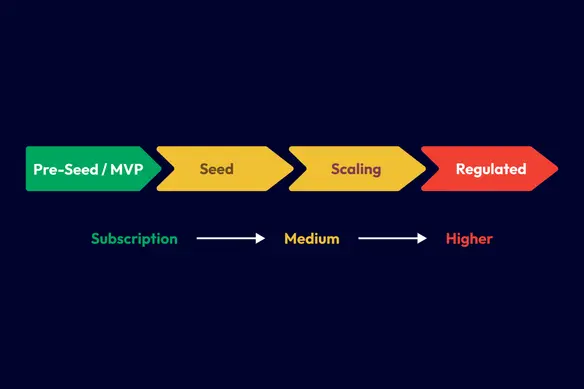
Typical Subscription Ranges by Company Stage and Involvement
Use this table as a starting point, not a quote. It is meant to help you sanity-check offers.
| Stage / Need | What You Typically Need | Typical Monthly Subscription Range |
|---|---|---|
| Pre-Seed / MVP Planning | Architecture direction, build vs buy calls, hiring plan | $4,000–$8,000 |
| Seed / Early Product | Roadmap ownership, sprint guardrails, vendor oversight | $7,000–$15,000 |
| Scaling (Team + Users Growing) | Delivery management, reliability, and cloud cost control | $12,000–$25,000 |
| Regulated Or High-Risk Systems | Security and compliance readiness, tight audit expectations | Often, the top end of the range |
If you are comparing providers internationally, rates can differ substantially by region. Some UK guides cite monthly subscriptions of £3,000–£7,000, depending on the time commitment.
What Drives Fractional CTO Cost In 2026 (The Real Levers)
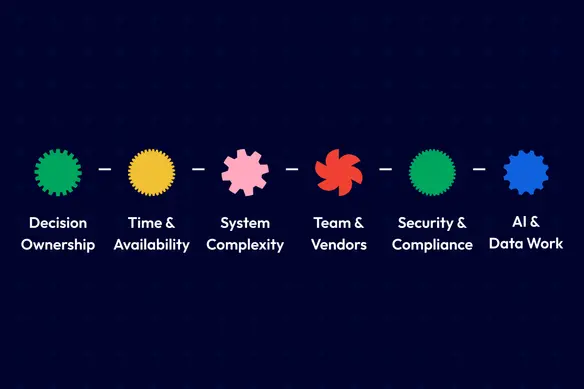
Most pricing is not driven by the title. It is driven by risk and responsibility.
Decision Authority And Accountability
The biggest cost jump happens when your fractional CTO is not just advising, but is accountable for outcomes: roadmap choices, platform decisions, delivery health, and technical debt direction.
Time Commitment And Availability Expectations
There is a difference between:
- One scheduled weekly call
- Being embedded in leadership flow, async decisions, and fast turnaround
Higher availability tends to raise cost because you are buying responsiveness, not just hours.
System Complexity
Costs rise when your environment includes:
- Multiple apps and integrations
- Legacy systems
- High uptime requirements
- Multi-tenant or regulated workflows
Team Size And Delivery Model
Leading one small internal team is different from coordinating:
- Internal devs + contractors
- Multiple vendors
- Offshore teams
- Handoffs across product, design, and engineering
Security, Compliance, And “Audit-Ready” Pressure
If you are heading toward SOC 2, HIPAA, PCI, or enterprise procurement, you are buying more than architecture. You are buying guardrails, documentation discipline, and process maturity.
AI And Data Strategy (A Very 2026 Cost Driver)
In 2026, “AI features” often mean:
- Data readiness
- Model selection and evaluation
- Cost controls (inference + tooling)
- Privacy and risk controls
That work can increase scope quickly if it is not bounded. (If AI is on your roadmap, it is worth aligning early on what is strategy vs build.)
What A Good Subscription Typically Includes (Checklist)
Before you agree to any monthly number, confirm what the engagement actually buys you.
A strong fractional CTO subscription commonly includes:
- A technical roadmap tied to business goals and budget guardrails
- Architecture and platform selection, including build vs buy evaluations
- Delivery management support (process, milestones, removing blockers)
- Vendor and tooling evaluation, plus oversight
- Hiring support and team design (roles, leveling, interview loops)
- Security and compliance readiness planning when relevant
- A clear cadence (weekly or biweekly leadership sync, plus async decision flow)
If a provider cannot articulate deliverables and operating rhythm, the subscription is usually buying “access,” not progress.
How To Keep Virtual CTO Pricing Affordable (Without Risk)
“Affordable CTO services” is not about finding the lowest monthly number. It is about paying for the smallest amount of senior leadership that removes the most risk.
Here are the most reliable cost controls:
1) Buy the right model for your stage
- If you only need a second opinion, do not buy a high-touch subscription.
- If you need ongoing prioritization and leadership, do not buy hourly and hope it stays small.
2) Define decision rights up front
A fractional CTO engagement stays affordable when everyone knows:
- Who owns technical decisions
- Who owns product priorities
- What “done” means for roadmap items
- How tradeoffs get approved
3) Avoid paying executive rates for execution-only tasks
If your biggest bottleneck is delivery capacity, a fractional CTO plus staff augmentation is often more efficient than trying to use CTO time as “extra engineering hours.”
4) Use A Simple subscription Reality Check
Many guides convert hourly rates into rough subscriptions based on weekly time commitment. It is not perfect, but it helps you sanity-check proposals.
5) Protect Context If You Outsource
If you are outsourcing any build work, cost control depends on preserving product context and decision quality, not just shipping tickets. SeeSaw Labs’ outsourcing guide frames this clearly: the biggest failures are structural, not talent-based.
Why Many Teams Choose SeeSaw Labs For Fractional CTO Services
SeeSaw Labs positions fractional CTO work as embedded technical leadership that bridges business goals and engineering execution, with coverage across roadmap, architecture, security readiness, hiring, and delivery management.
Two specifics that matter when you are thinking about cost:
- Their approach is built around a structured operating rhythm (Discover, Define, Design, Develop, Delight), which reduces ambiguity and keeps leadership work tied to outcomes.
- They also support adjacent levers that keep fractional leadership efficient, like staff augmentation when the real gap is capacity.
FAQs
How Much Does A Fractional CTO Cost Per Month In 2026?
Most guides cluster monthly subscriptions around $4,000–$15,000, with higher-touch engagements reaching $25,000/month when scope and availability expand.
What Is The Difference Between Fractional CTO Cost And Virtual CTO Pricing?
They are often used interchangeably. In practice, “virtual CTO” usually emphasizes remote delivery and packaged plans, while “fractional CTO” emphasizes part-time executive leadership. Both can be hourly, subscription, or project-based.
Is Hiring A Fractional CTO Cheaper Than A Full-Time CTO?
In most cases, yes, because you are not paying full-time salary, benefits, and hiring overhead. For reference, CTO salary averages and ranges vary widely by market and company size, but common datasets put US averages in the low-to-mid $200k range.
When Should I Choose Hourly Instead Of A Subscription?
Choose hourly when you want