
Unlocking AI Potential in Healthcare
AI is transforming healthcare and insurance, but adoption faces hurdles like data security, legacy systems, stakeholder alignment, bias, and cost—strategies are key to making it work effectively.
SeeSaw Labs provides SaaS development services for founders and product teams who need a strategy, design, and engineering partner without building a full in-house team. We cover SaaS and startup product development end to end: product discovery, UX/UI design, MVP development, multi-tenant architecture, integrations and billing, QA, cloud delivery, and the post-launch support that keeps your platform scaling with your customers and your funding.
Start with a free SaaS FIT Check. You get an honest fit assessment, the biggest product and technical risks, a recommended delivery path, and clear next steps for the first 30 to 90 days.
We test the problem, the users, and the business model before you spend on a full build.
A lean first version that proves value to customers and investors, scoped to fit your runway.
Multi-tenant foundations, security, and integrations that won’t need a rewrite when you grow.
Strategy, design, and engineering from the start, so you learn faster and carry less delivery risk than hiring a team from scratch.


Our SaaS application development services cover the full product lifecycle, from the first customer interview to the release after next.
Research the problem, the customers, and the competition to confirm the opportunity before you build.
Clickable prototypes to test early, then a focused MVP built to launch, learn, and iterate.
Onboarding and core workflows designed to drive activation, retention, and conversion.
Tenant management, user roles and permissions, and white-label options designed in from the start.
Subscription billing, free trials, seats, and usage-based billing wired into your product and your payment provider.
Secure API integration with the tools your customers already use, plus a public API when your product needs one.
Automated and manual testing in every release, so new features don’t break what customers rely on.
Repeatable cloud deployment with CI/CD pipelines, staging environments, and infrastructure you own.
Access controls, encryption, audit logs, and the evidence security reviews ask for, planned in from the start.
Stabilize an inherited codebase, move a single-customer product to multi-tenant, or modernize in stages.
Observability and monitoring, alerting, dependency updates, and fixes that keep your platform healthy.
Product analytics and customer feedback turned into a roadmap that improves adoption and retention.
SaaS turns software into an ongoing relationship with your customers. A team that has shipped SaaS before helps you get the benefits without paying for the usual mistakes.
Subscriptions create predictable income that grows as retention improves.
Central delivery means every customer gets fixes and features the day you ship them.
Usage data shows what customers actually do, so the roadmap follows evidence.
We test the idea with prototypes and real users before you fund a full build.
Strategy, design, engineering, QA, and cloud delivery from day one, without months of recruiting.
Tenancy, roles, and billing decisions made early, so growth doesn’t force a rewrite.
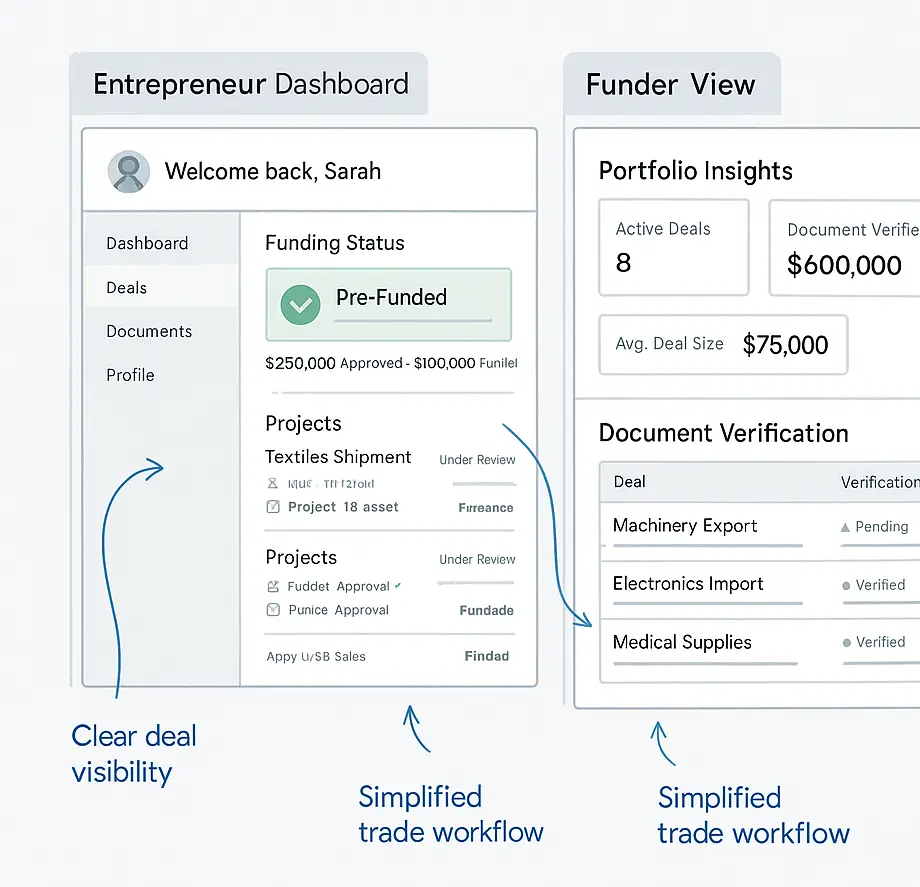
Entrepreneurs in developing countries struggled to finance trade deals through slow, opaque funding pathways. We defined, designed, and built Kountable’s multi-tenant FinTech SaaS platform, with web and mobile apps, APIs, and backend workflow engines that connect entrepreneurs, funders, and administrators and digitize trade finance end to end. The platform grew from idea to an $8M Series B, and ongoing iterations kept improving adoption.
Link to full case study
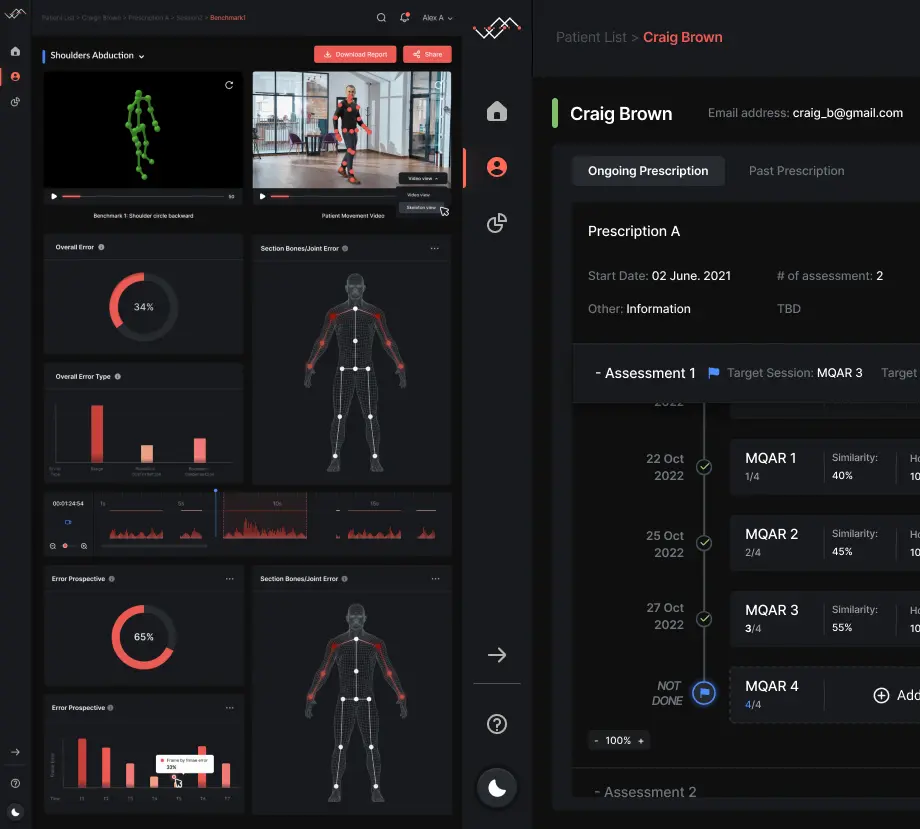
LineDance AI had a powerful movement analysis engine but no internal product team. Through product discovery, we identified physical therapy as the market with the most immediate impact, mapped clinician and patient workflows, and designed and built Movality, a working web prototype with live video comparison, reporting, and clinical dashboards. It impressed investors and healthcare partners, clarified the product vision, and paved the way for future funding.
Link to full case study
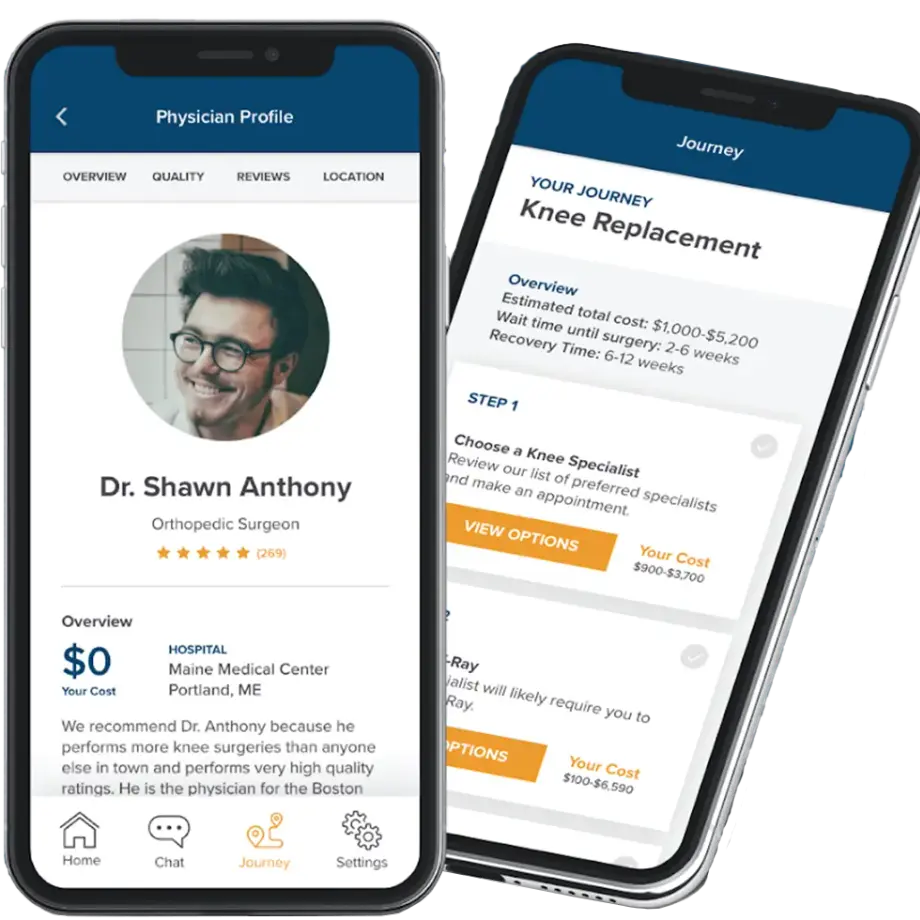
Archway Health set out to lower self-insurance costs for employers without lowering care quality. We scoped an MVP that connects organizations to Archway’s cost-and-care algorithms, then designed and built a HIPAA-compliant iOS and Android experience on a secure cloud platform with its own API and database. The product launched successfully, and early customer feedback shaped the next iterations.
Link to full case study
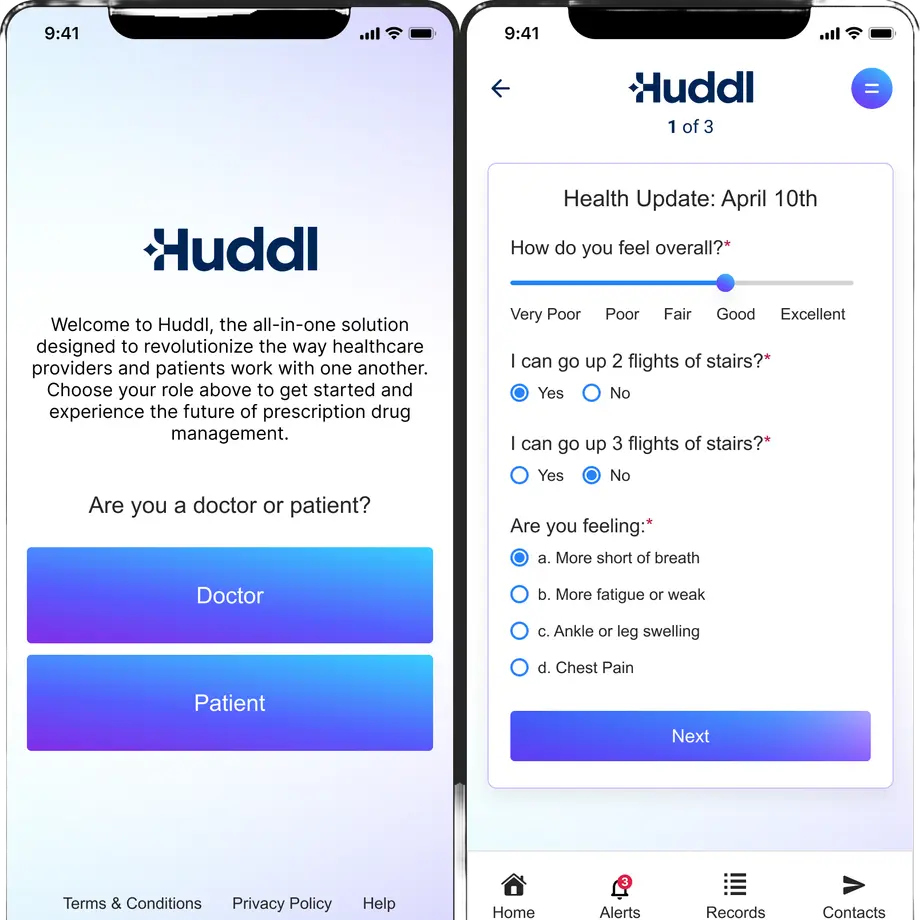
Prescribers, patients, and pharmacies navigating Risk Evaluation and Mitigation Strategy (REMS) programs faced fragmented workflows. We defined and built a multi-tenant SaaS app, built to HIPAA requirements, that brings REMS education, compliance, and drug administration into one experience, with white-label customization so each drug program gets its own branded product on a shared platform. It now spans 60+ therapies.
Link to full case study
Our process
Like a seesaw, we balance startup speed with the discipline it takes to scale. Every SaaS engagement follows the same five steps, so each release moves you closer to product-market fit.
Research your market, users, and business goals to find the real problem worth solving and the opportunity worth funding.
You get: Evidence, risks, and a clear opportunity.
Scope a focused MVP, set success metrics, and build a product roadmap that fits your runway.
You get: An MVP scope, milestones, and a clearer estimate.
Prototype and test core workflows with real users, and design an architecture that scales with your customers.
You get: A validated experience and an architecture plan.
Build, integrate, and test in iterative releases, with automated checks and release readiness reviews before anything reaches customers.
You get: Working, tested software early and often.
Launch, monitor, and support the platform, then use analytics and customer feedback to plan the next phase of growth.
You get: A live product, monitoring, and a roadmap we can own with you.
Your customers trust you with their data, and their security teams will ask how you protect it. These safeguards are designed in during Define, not bolted on before a big deal.
Every request is scoped to a tenant, with shared, separate-schema, or separate-database designs chosen by risk and customer needs.
Roles and permissions per tenant, with single sign-on when enterprise customers expect it.
Data encrypted in transit and at rest, with secrets kept out of the code.
A record of who did what and when, for support, security reviews, and compliance evidence.
Automated backups and tested restores, so one bad day doesn’t become a lost customer.
Errors, performance, and uptime tracked, with alerts that reach a person.
For healthcare SaaS, we design around protected health information and use hosting vendors that sign BAAs.
We help you build the controls and evidence a SOC 2 audit will ask for. Certification comes from your auditor.
We build and document the safeguards. Your compliance program, legal review, and any certification stay with you and your advisors.
Comparing SaaS application development companies or SaaS software development services? Whoever you hire, ask these questions before you sign.
Can they show SaaS products they built that customers use and investors funded?
Will they challenge the idea and the scope, or only build the spec?
Can they explain how tenants, roles, and billing will work as you grow?
Who tests each release, runs deployments, and owns the infrastructure?
How do they handle tenant isolation, access control, encryption, and audit logs?
Have they connected payments, subscriptions, and the third-party systems you need?
Does the contract assign you the code, designs, and documentation?
Who monitors, maintains, and improves the product after launch?
SaaS products vary too much for one-size-fits-all prices. With AI-accelerated delivery, a focused SaaS MVP can be live in 4 to 6 weeks; full platforms with many roles, billing, and integrations ship in phases. These factors move cost and timeline the most:
A validated concept moves faster than an idea that still needs discovery.
Each workflow and each role with its own permissions adds design, build, and testing.
Flat plans are simple. Seats, usage-based billing, and per-tenant branding take more.
Third-party APIs, data imports, and older systems are often the biggest variable.
HIPAA, audit trails, and SOC 2 evidence add work to design, hosting, and QA.
Taking over or migrating a product starts with an assessment of what to keep.
Most SaaS clients start with a defined project and move to an ongoing team once they have paying customers and a roadmap that changes every month.
| Engagement | Best when | What you get |
|---|---|---|
| Discovery Sprint | You have an idea or a funding conversation coming and need clarity before building. | Validated scope, a prototype, a roadmap, and a grounded estimate. |
| Fixed-Scope MVP | You know what to build first and need it in front of customers or investors. | A defined scope, milestones, and a launch-ready MVP you own. |
| Dedicated Product Team | You have launched and need continuous releases, support, and roadmap work. | Strategy, design, engineering, and QA on a monthly retainer. |
| Assessment and Takeover | You have an existing SaaS product that is unstable, slow, or hard to change. | A code and architecture review, a stabilization plan, then staged modernization. |
On project-based engagements, you own the code, designs, and documentation, with a clean handoff whenever you want one. Want a number for your product? Start with a free FIT Check.
These are architecture choices worth making on purpose, because they cost far less to plan than to retrofit.
Clean data and clear workflow steps, so AI features can be added where they save customers time.
A well-documented API, so partners, customers, and your own apps share one source of truth.
Logs, metrics, and traces that show what broke and why before customers tell you.
Event tracking planned with the roadmap, so you can measure activation, retention, and churn.
Clear boundaries between parts of the product, so teams can change one area without breaking another.
Automation with human review where the stakes are high, and audit trails for what it did.
HIPAA-compliant platforms for providers, payers, patients, and pharmacies, from MVP to multi-tenant scale.
Secure, transparent platforms for financing, transactions, and member education.
Turning AI and deep-tech engines into usable products that customers adopt and investors fund.
Multi-tenant platforms for scheduling, communication, statements, and account management.
Two-sided platforms and subscription services that connect customers with providers and experiences.
Self-service platforms that wrap complex APIs into simple tools your customers can run themselves.
We act as your product team, not just a SaaS development company that takes orders. We challenge assumptions, recommend the best options, and stay accountable from first prototype through growth.
What you get with SeeSaw Labs:
Validating a new SaaS idea, launching an MVP, or fixing a platform that won’t scale? We will assess the fit, surface the biggest risks, recommend a delivery path, and outline the first 30 to 90 days.
SaaS development services cover designing, building, launching, and scaling subscription software that many customers use from one shared platform. It is a focused form of end-to-end software product development. SeeSaw Labs’ SaaS product development services include:
Look for SaaS products the company has actually shipped, a team that challenges your scope instead of just building it, and clear answers on multi-tenant architecture, security, QA, and who runs the cloud. Confirm that the contract assigns you the code and IP, that you will see working software every few weeks, and who supports the product after launch.
Yes. We specialize in helping founders launch and iterate fast with lean, scalable MVPs. Many of our startup clients have no internal product team, so we act as one, from shaping the concept to building a product that customers and investors can see and touch. When the product starts on phones, we offer mobile app MVP development for iOS and Android.
A multi-tenant platform serves many customer organizations from one shared application, while keeping each customer’s data, users, and settings separate. It is the standard model for B2B SaaS because it is efficient to run and update. We help you decide how much multi-tenancy you need at the MVP stage so you don’t overbuild, and design it so you don’t have to rebuild later.
We don’t start with a favorite framework. We choose proven, widely supported cloud technologies based on your product’s needs, your team’s skills, your compliance requirements, and how you expect to scale, so your platform is easy to hire for and maintain long after launch.
Cost depends on the complexity of your core workflows, user roles, billing model, integrations, and any compliance requirements. We scope MVPs to your runway, focusing on the features that prove value first, and structure engagements as a clearly defined project scope or an ongoing monthly retainer.
With AI-accelerated delivery, a focused SaaS MVP can be live in 4 to 6 weeks. Full platforms with many roles, billing, and integrations are delivered in phases, with working software to show customers and investors along the way.
A fixed-scope engagement fits a well-defined first release, like an MVP with clear must-have features. A dedicated monthly team fits when priorities change often, such as after launch, when customer feedback drives the roadmap. Many SaaS clients start fixed-scope and move to a dedicated team.
An MVP team gets you from idea to launch and first customers. Once you have paying customers, a roadmap, and releases every few weeks, you need an ongoing product partner, or your own team, to keep improving, supporting, and scaling the platform.
Yes. We have helped startups turn early concepts into fundraising-ready products, including a platform that grew from idea to an $8M Series B and an AI prototype that impressed investors and healthcare partners. A working, well-designed product makes your vision tangible and your pitch far more credible.
Every request is scoped to a tenant, and we choose a shared, separate-schema, or separate-database design based on your risk and your customers’ requirements. On top of that come role-based access control, encryption in transit and at rest, audit logs, automated backups, and monitoring.
Yes. We have built HIPAA-compliant platforms for healthcare organizations, including a self-insurance care platform and a multi-tenant app that unifies medication safety workflows across 60+ therapies, with white-label customization built in. Learn more about our healthtech MVP development.
Certification comes from an independent auditor, not from a development partner. We help you get ready by building the controls, logging, access reviews, and documentation a SOC 2 audit asks for, and we work alongside your compliance team.
Yes. We assess your current platform, architecture, and backlog, stabilize what is there, and build a roadmap for scaling performance, features, and your customer base, without forcing an unnecessary rewrite. That includes moving a single-customer product to a multi-tenant architecture.
Yes. We build subscription billing, free trials, seat-based plans, and usage-based billing on established payment providers, and connect your platform to CRMs, analytics, and the third-party APIs your customers rely on.
We stay on as your product team if you want us to. That covers hosting, monitoring, and maintenance to keep the platform running smoothly, plus ongoing feature development guided by analytics and customer feedback. If you would rather take it in house, we hand off documented code and infrastructure.
AI is transforming healthcare and insurance, but adoption faces hurdles like data security, legacy systems, stakeholder alignment, bias, and cost—strategies are key to making it work effectively.

Modernizing insurance systems is critical, with challenges and best practices for integrating new technologies into legacy infrastructure to enhance efficiency, security, customer experience, and long-term scalability.

Modernizing legacy healthcare systems is essential but poses cybersecurity risks, highlighting best practices for risk assessment, strategic planning, data mapping, and implementing robust security measures.
Visit The Lab for more Guides, Tools and Experiments by SeeSaw’s team of digital inventors!