
Custom Healthcare Software MVP to Scale Roadmap
A practical roadmap for custom software development for healthcare—covering MVP scope, HIPAA-aligned security, integrations, scaling, and ongoing support.
SeeSaw Labs is a healthcare app development company for healthtech founders, providers, and care-operations teams. We design and build patient apps, clinician tools, and portals, with HIPAA-aware architecture planned from day one.
Start with a short call. We will map the workflow worth building first, flag the compliance and integration risks, and outline a realistic path to a working MVP.
We start with the people doing the work: patients, clinicians, pharmacists, and coordinators. You get an MVP scope built around their day, not a feature wish list.
PHI boundaries, access roles, and audit logging are decided in discovery, and we sign a Business Associate Agreement when the work touches PHI.
With AI-accelerated delivery, a focused healthcare MVP can be in users’ hands in 4 to 6 weeks, with the riskiest piece tackled first.
Staged rollouts, monitoring, and ongoing improvement, so the product keeps up with your users, your payers, and your regulators.


Custom healthcare app development across mobile and web, and the custom healthcare software behind it, for every side of care: the patient, the clinician, and the team keeping operations running.
Healthcare mobile app development for onboarding, education, reminders, and adherence tools that keep patients on track between visits.
Tools that cut clicks and paperwork for clinicians, care coordinators, and nurses, on the devices they already carry.
Video visits, secure messaging, and asynchronous check-ins built into a care workflow, not bolted on beside it.
Apps that collect device and patient-reported data, flag what needs attention, and route it to the right person.
Self-service portals for scheduling, records, orders, and approvals, so fewer requests end up on the phone.
Medication approval, REMS, delivery, and adherence systems for pharmacies and specialty therapy programs.
Intake, referral, and scheduling tools that keep patients, staff, and partner organizations in sync.
Intake, billing support, and reporting tools that replace spreadsheets and double entry for operations teams.
Dashboards, scorecards, and AI that turn scattered clinical and operational data into decisions.
Plenty of healthcare software can be bought. Custom healthcare software development makes sense when the workflow is what sets you apart, or when off-the-shelf tools have to bend until they break. Most strong products end up hybrid: proven components for video, messaging, payments, and identity, around a custom core.
If the way you deliver care is your advantage, a generic tool will flatten it into everyone else’s.
A product that covers most of your needs can still leave staff working around it every day.
Staff copy patient, order, and billing details between the EHR, the pharmacy system, and spreadsheets.
Sensitive data travels through email, shared drives, and texts because no system was built to carry it.
Patients, prescribers, pharmacies, and payers all touch the same workflow, and no product serves them all.
An MVP that proved the idea but can’t pass a security review or scale to the next customer.
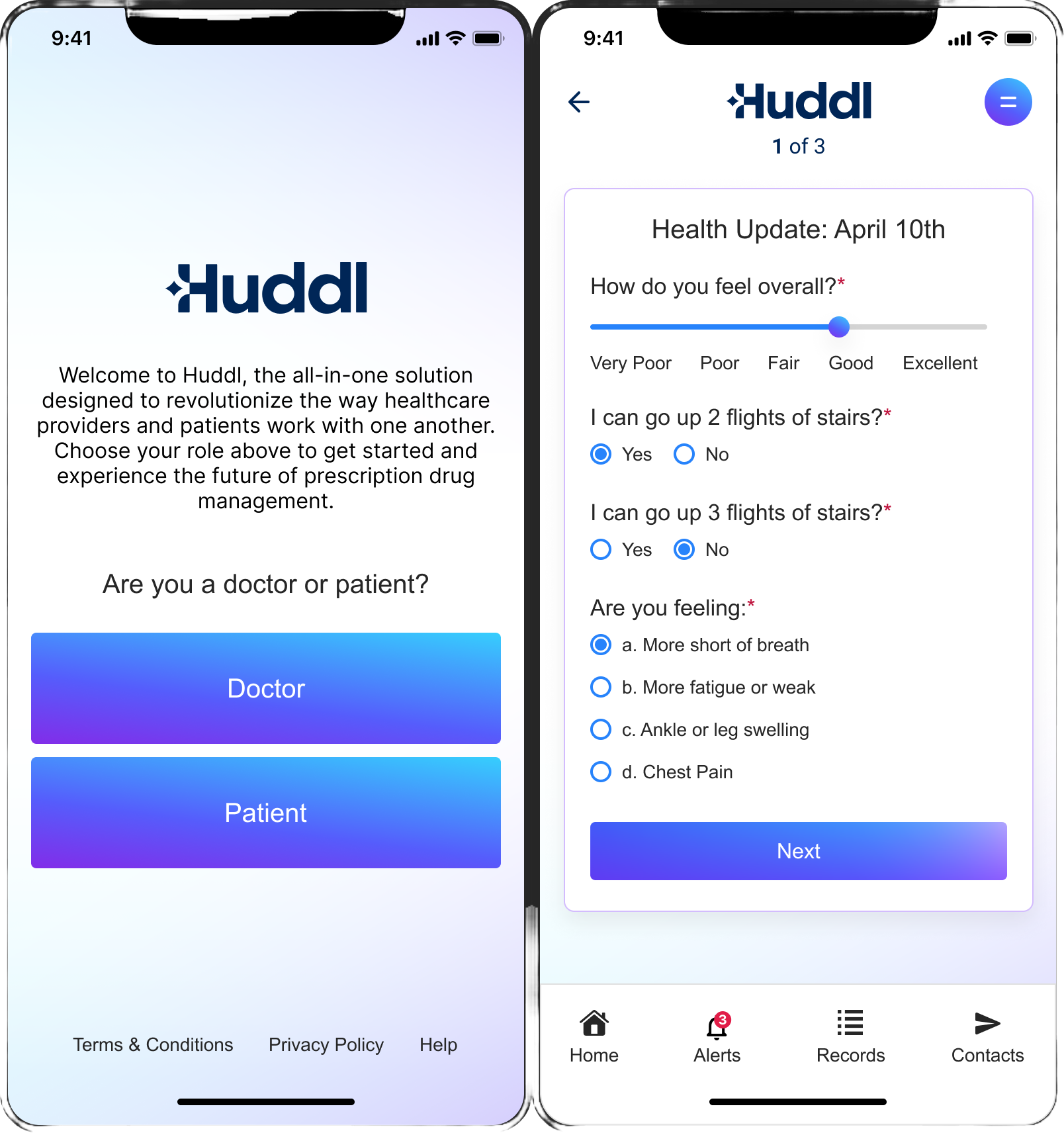
Prescribers, patients, and pharmacies navigating Risk Evaluation and Mitigation Strategy (REMS) programs faced fragmented paperwork and confusing handoffs. We designed and built a multi-tenant mobile app, built to HIPAA requirements, that brings REMS education, compliance tracking, and drug administration into one experience, with white-label delivery for each therapy. The platform now spans 60+ therapies.
Link to full case study
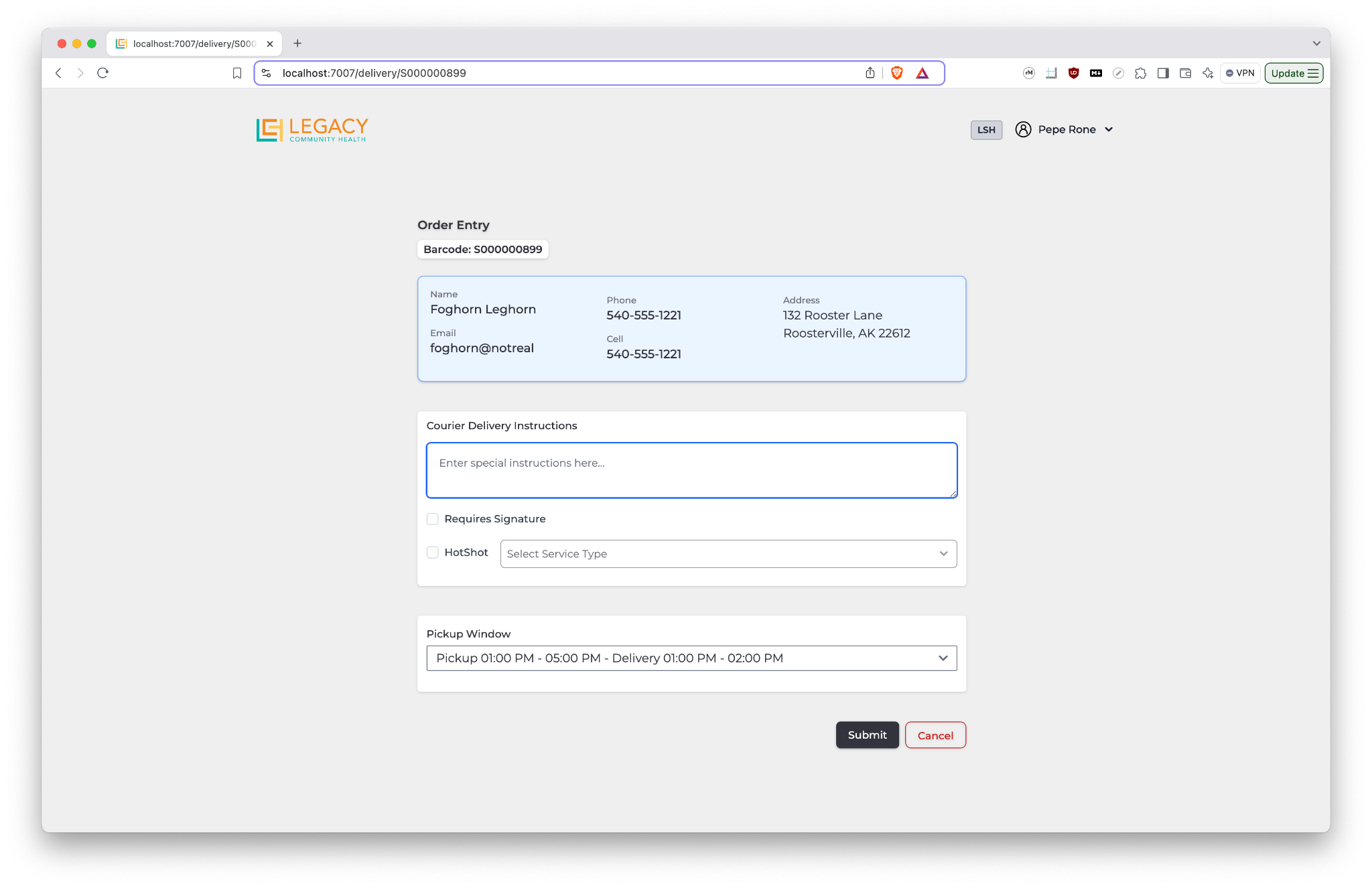
Legacy Community Health, Texas’ largest FQHC, relied on USPS to deliver prescriptions, which meant multi-day waits for patients. We built custom healthcare software for its pharmacies, couriers, and administrators to create, schedule, and track deliveries through local couriers, with AI routing built in. Delivery went from multi-day to same-day.
Link to full case study

Hospice Pharmacy Solutions (HPS) was slowed by manual medication approvals and high administrative costs. We designed and built a secure customer service platform with issue tracking, a self-service portal for hospice providers, two-factor authentication, and AI that surfaces lower-cost drug alternatives. Approvals became 5× faster and medication costs dropped 15%.
Link to full case study

Rendevor provides on-site dialysis for hospitals and post-acute care centers, but its facility audits depended on handwritten forms and spreadsheet scorecards. We built a clinical analytics platform that reads the handwritten audits with AI and generates facility performance scorecards automatically. Manual audit entry dropped 80%, and executives see clinical quality in real time.
Link to full case study
Our process
Healthcare products fail when teams build before they validate, or validate with the wrong people. Our 5D process puts the riskiest assumptions in front of real patients and clinicians first, then builds only what the evidence supports.
Map the jobs to be done with the people who do them, and write down the value, usability, feasibility, and compliance risks. You get a clear problem worth solving and a short list of what could sink it.
Agree on users and roles, PHI boundaries, integrations, success metrics, and the smallest MVP that proves value. You get a scope, a phased roadmap, and the hardest pieces scheduled first.
Prototype the key workflows and test them with patients, clinicians, and staff until they hold up. You get validated designs and an architecture that fits your systems and compliance needs.
Build in short releases with security testing, role testing, and staged integrations. You get working software early, and evidence that the controls work, not just the features.
Pilot with a small group, launch in stages, and keep improving from real usage. You get a product your users adopt, and a team that stays with you as it scales.
Healthcare-ready doesn’t mean one checkbox. It depends on your users, your data, and what your product does. We identify what applies in discovery, then design the product and the delivery process to prove it. We are not your lawyers or your auditors, but we build software that makes their job easier.
Access controls, audit controls, encryption in transit and at rest, and secure authentication mapped to the HIPAA Security Rule’s safeguards.
We sign BAAs with clients when our work involves PHI, and we keep PHI out of every environment that doesn’t need it.
A data inventory of what you create, store, and share, and role-based access so each user sees only what their job requires.
Logging, monitoring, and access traceability that support investigation and reporting if something goes wrong.
Selling to health systems or payers means security questionnaires. We help you build the controls and evidence a SOC 2 audit will ask for.
If a feature drifts toward diagnosis or clinical decision support, we flag it early, so you can get a regulatory classification before it shapes the roadmap.
Not sure what applies to your product? Bring your idea to a short call and we will map your compliance triggers together.
Integrations are where healthcare timelines slip: sandbox access, credentialing, and data mapping all take longer than the demo suggests. We plan them in discovery, stage them so they never block launch, and test them with real data before go-live.
Read and write patient, encounter, and order data through modern EHR APIs, so clinicians don’t chart twice.
FHIR-based APIs and HL7 messaging that map to real clinical concepts and keep data consistent across systems.
Connections to pharmacy, lab, eligibility, and prior authorization systems that remove manual handoffs.
Proven video, messaging, scheduling, and payment services wired into your workflow instead of rebuilt from scratch.
Your CRM, billing, couriers, and in-house tools connected, so data is entered once and stays in sync.
Clean data pipelines into the dashboards and reports your clinical and business leaders rely on.
Planning an EHR connection? Read our guide to healthcare interoperability and EHR integration.
The right platform depends on who uses the app, where they use it, and what device features it needs. We recommend the approach that fits your users and budget, not our favorite framework.
Best when the app leans on device hardware, like Bluetooth medical devices, sensors, or offline use in the field.
One codebase for iOS and Android. A strong fit for most patient engagement apps and healthtech MVPs that need to reach everyone fast.
Best for clinicians at a workstation, admin teams, and portals patients open from a link, with nothing to install.
A patient mobile app, a clinician web app, and an admin portal on one secure backend. Most healthcare products end up here.
Weighing the options? See our comparison of cross-platform and native approaches for healthcare apps and our mobile app development services.
What works in a demo can fail in a busy clinic. Healthcare UX design has to serve very different users, often inside the same product, and it has to earn adoption from people who didn’t ask for new software.
Plain language, accessible design, and onboarding that works for every age, ability, and comfort level with technology.
Fewer clicks, fewer logins, and screens that fit the clinical workflow, so the app saves time instead of adding to the charting burden.
Queues, bulk actions, and clear status, so coordinators and pharmacy staff can move work forward without phone calls.
We put prototypes in front of real patients and clinicians before we build, then keep testing as the product grows.
AI works best in healthcare when it removes a manual step that staff already hate. We build it into the workflow with clear human review, and we keep it away from clinical decisions unless your regulatory path supports it.
Read handwritten and scanned forms automatically, like the audit scorecards that cut Rendevor’s manual entry by 80%.
Surface options and next steps for staff, like the drug alternatives behind Hospice Pharmacy Solutions’ 5× faster approvals.
Optimize deliveries, visits, and queues, like the AI routing that got Legacy Community Health to same-day delivery.
Answer routine questions, summarize messages, and route requests to the right person, with staff in the loop.
Pull the details out of referrals, faxes, and intake forms so staff review instead of retype.
Turn audits, encounters, and operations data into dashboards and alerts that leaders act on.
Exploring AI for your organization? See our AI automation services and our take on AI in healthcare.
AI has changed the math on custom software. A focused healthcare MVP that once took four months can now be live in 4 to 6 weeks. Every product is still priced on its scope, so here is what moves cost and timeline most:
Each workflow, and each role with its own permissions (patient, clinician, admin, partner), adds design, build, and testing.
EHR, pharmacy, lab, and payer connections are often the biggest variable, especially sandbox access and credentialing.
Audit trails, security testing, and SOC 2 or regulatory evidence add work to design, hosting, and QA.
Moving and cleaning data from a legacy system or a fragile first version takes careful planning.
AI that reads documents or routes work needs real data to tune and clear human review steps.
Pilots, training, staged rollout, and ongoing improvement are scoped up front, so nothing surprises you after launch.
Would rather not fund a project up front? Custom FIT software covers the build, hosting, security, and ongoing changes for one flat monthly fee. Or talk to a healthcare app development expert about your scope.
Teams planning a healthtech MVP, or replacing a fragile first version before the next round or the next big customer.
Clinics, health centers, and care networks that need patient-facing and staff-facing tools tied to real workflows.
Pharmacies, PBMs, and therapy programs managing approvals, REMS, delivery, and adherence.
Care operations with complex logistics, audits, and quality reporting across many facilities.
Teams inside larger organizations that need a secure app shipped without waiting on the IT backlog.
Healthcare SaaS product development for multi-tenant platforms serving many providers or programs.
No amount of testing prepares a healthcare product for real users. We plan launch as a series of small rollouts, not one big day.
Start with one clinic, program, or patient cohort, and gather feedback while the stakes are low.
Open up to more sites and users as the product proves itself, with monitoring and a rollback plan for every release.
With a project engagement, the code, documentation, and infrastructure are yours, with a clean handoff whenever you want it.
Maintenance, security updates, and new features as your users, payers, and regulations change.
In healthcare, the best partner prevents expensive mistakes, not just writes code. Whoever you hire, ask if they can explain real clinical workflows, map HIPAA safeguards to product controls, plan and test integrations, spot SaMD risk early, test every role and audit trail, and stay after launch. Here is how SeeSaw Labs measures up as a healthcare software development partner:
Get clarity on scope, compliance, integrations, and the fastest safe path to launch.
We build healthcare apps and custom healthcare software for patients, clinicians, and operations teams, including:
We follow five steps. Discover the workflow and the risks with real users. Define the MVP scope, PHI boundaries, and integrations. Design and test prototypes with patients and clinicians. Develop in short, security-tested releases. Then pilot, launch in stages, and keep improving. The hardest healthcare constraints, like compliance and integrations, get tackled first, not last.
Yes. We design HIPAA-aware architecture with role-based access, audit logs, encryption, and secure authentication, and we keep PHI out of every environment that doesn’t need it. We sign Business Associate Agreements when our work touches PHI. HIPAA compliance also depends on your own policies and operations, so we work alongside your compliance team and help you prepare for security reviews and SOC 2.
It depends on your users. Cross-platform mobile apps suit most patient apps and healthtech MVPs. Native apps make sense when you rely heavily on device hardware, like Bluetooth medical devices. Web apps and portals work best for clinicians at a workstation and admin teams. Many healthcare products combine all three on one secure backend.
Buy when your workflow is standard and a trusted product covers most of your needs. Build when your workflow is your advantage, when several kinds of users share one process, or when integrations force off-the-shelf tools to bend until they break. Many teams go hybrid: proven components for video, messaging, and payments around a custom core.
Look for healthcare case studies with measurable results, a clear answer to where compliance shows up in their process, experience with EHR and FHIR integrations, a test plan for roles and audit trails, code ownership, and support after launch. Ask what their estimate leaves out. You can review our work and meet the SeeSaw Labs team.
Healthcare app development cost depends on the number of workflows and user roles, integrations like EHR or pharmacy systems, compliance and security requirements, data migration, and AI features. We price each project on its scope after a short discovery, so the number reflects your real workflows. If you would rather not fund a project up front, custom FIT software delivers the app for one flat monthly fee.
With AI-accelerated delivery, a focused healthcare MVP can be live in 4 to 6 weeks. Deep EHR integrations, enterprise security reviews, and regulatory work add time, so larger products ship in phases, with working software released along the way.
The smallest set of features that solves one painful job for one group of users, plus the foundations you can’t retrofit: secure authentication, role-based access, audit logging, and clear PHI boundaries. Stay out of the feature trap. Integrations can often start manual or limited and grow in later phases. See our healthcare MVP-to-scale roadmap for more.
Yes. Many teams come to us with a first version that proved the idea but can’t pass a security review, integrate with a customer’s EHR, or scale. We review the code and architecture, fix the riskiest gaps first, and decide with you whether to refactor or rebuild, without disrupting the users who rely on it.
Yes. We integrate with EHRs through FHIR APIs and HL7 interfaces, and with pharmacy, lab, payer, scheduling, payment, and CRM systems. We plan integrations in discovery, stage them so they don’t block launch, and validate them in sandboxes and with real data before go-live.
Most healthcare apps don’t. Software can be regulated as a medical device (SaMD) when it is intended to diagnose, treat, or guide clinical decisions. We flag those features early so you can get a regulatory opinion before they shape the roadmap, rather than discovering it at launch.
Yes. We pilot with a small group, expand in stages, and offer maintenance, monitoring, security updates, and ongoing improvement. You own the code, so you can also bring the product in-house with a clean handoff whenever you are ready.
A practical roadmap for custom software development for healthcare—covering MVP scope, HIPAA-aligned security, integrations, scaling, and ongoing support.

Understanding common causes of product failure in tech and health industries—misaligned vision, poor market fit, ignored user feedback, and lack of industry experience—can guide smarter strategies for successful product development.

Healthcare interoperability enables seamless information exchange between systems, improving efficiency, accuracy, and patient outcomes. Understanding standards, levels, and challenges is essential for modern, connected healthcare operations.
Visit The Lab for more Guides, Tools and Experiments by SeeSaw’s team of digital inventors!