
Unlocking AI Potential in Healthcare
AI is transforming healthcare and insurance, but adoption faces hurdles like data security, legacy systems, stakeholder alignment, bias, and cost—strategies are key to making it work effectively.
SeeSaw Labs designs custom AI workflow automation, agents, and integrations that cut manual work and move critical processes faster. We find the workflows where AI will pay for itself, then design, build, and deploy secure automation around the systems your team already uses, from a single workflow to custom AI product development.
Start with a short call to kick off our AI Agent Strategy & Readiness Review, our AI consulting and automation strategy engagement. We identify the best first workflow, expose delivery risks, and define a measurable first implementation.
Prefer the scenic route? Take the interactive tour
We pinpoint the processes, data, and decisions where AI will have real impact, and the ones where it won’t.
Which workflows to automate first, what to build or buy, and how to measure ROI.
Not slideware. Workflows and agents that plug into your existing systems.
Your team stops re-keying data and chasing approvals.


AI workflow automation combines triggers, data, AI models, integrations, and human approvals to move work across connected systems. Fixed-rule automation only follows if-this-then-that logic on structured fields. AI can read documents and messages, make bounded decisions, and hand anything uncertain to a person, so the workflow handles the messy inputs and exceptions that used to need someone to sort them by hand.
Documents, messages, images, and free-form requests are interpreted instead of manually categorized.
Work is routed on context and confidence, not only on fixed fields.
Sensitive, low-confidence, or regulated decisions go to a human reviewer.
Evaluation and monitoring show where the workflow gets it wrong, so it improves through controlled iteration.
Not every step needs AI. When inputs are structured and the rules are stable, deterministic automation is simpler and safer, and most workflows we build use both.
Low-code and no-code platforms are strongest for common, lower-risk workflows with stable connectors. Custom implementation is stronger when the workflow needs bespoke logic, regulated data, deep integrations, or tighter governance. A hybrid is often the fastest path to production.
| Approach | Best fit | Limitations | How we use it |
|---|---|---|---|
| Rule-based automation or RPA | Stable, repetitive, structured tasks | Brittle when inputs or conditions change | A reliable execution layer inside an AI workflow |
| Low-code or no-code platform | Common apps, fast pilots, simple workflows | Connector and governance limits at scale | When it is the fastest safe route to value |
| Custom AI workflow | Complex logic, unstructured data, regulated processes | More design and engineering up front | Designed, built, tested, and monitored around your systems |
| Hybrid | Existing platforms plus proprietary systems and controls | Needs clear architecture and ownership | Often the best balance of speed, control, and ROI |
Most of the effort is in the connections to your CRM, ERP, databases, and internal tools. Read more on integrating AI workflows with legacy systems and lowering risk during legacy-system modernization.
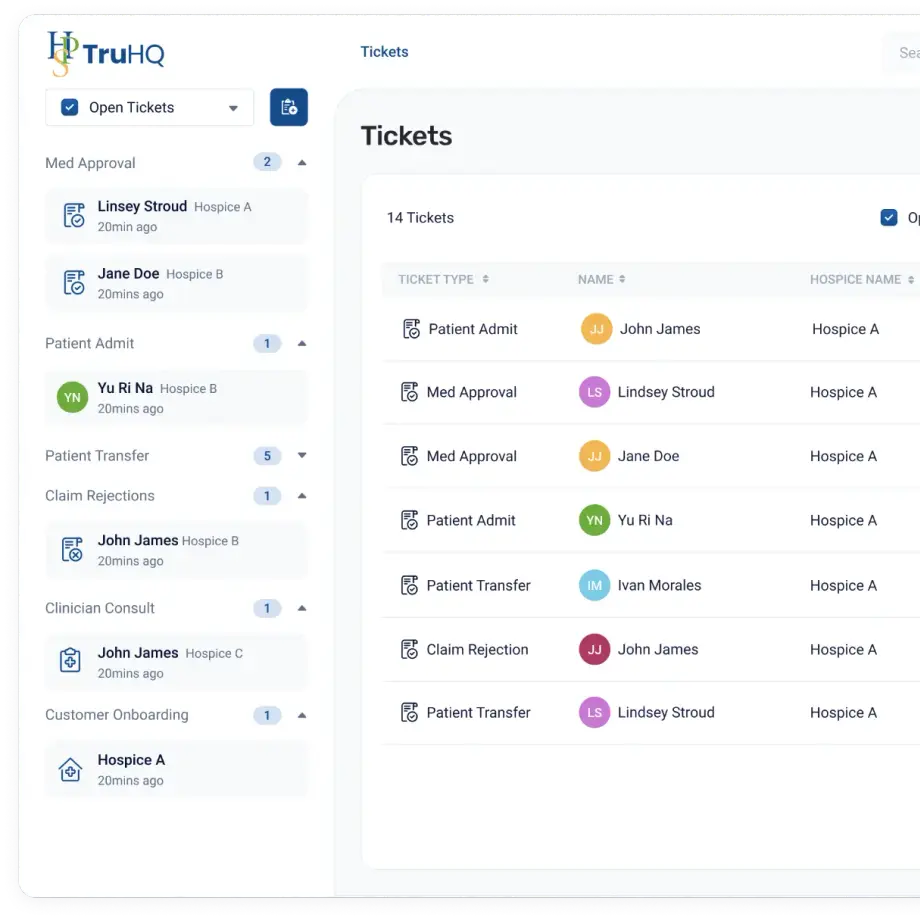
Hospice Pharmacy Solutions (HPS), a leader in pharmacy benefit management, was slowed by manual medication approvals and high administrative costs. We designed and built a HIPAA-compliant customer service platform with issue tracking, a customer portal, and AI that surfaces drug alternatives. Medication approvals became 5× faster and costs dropped 15%, letting HPS scale operations with fewer resources.
Link to full case study
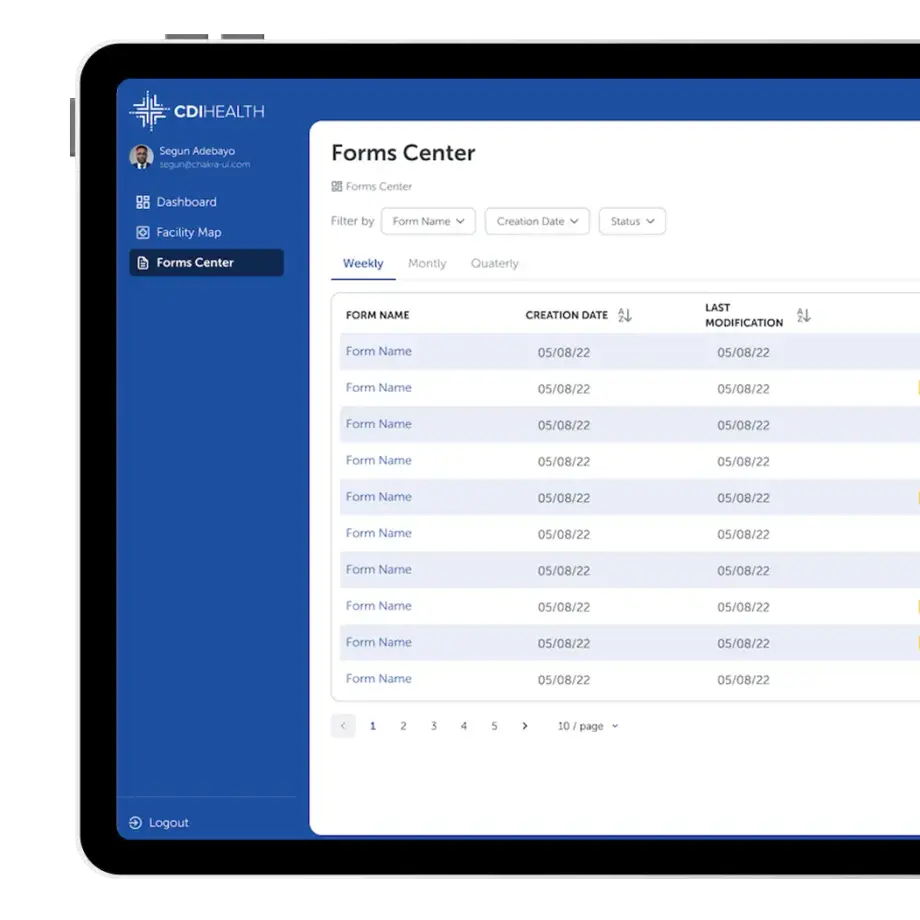
Rendevor provides on-site dialysis for hospitals, correctional facilities, and post-acute care centers, but its facility audits depended on manual data entry and spreadsheet scorecards. We built an analytics platform that uses AI handwriting recognition to capture audit data and automatically generates facility performance scorecards. Manual audit entry dropped 80%, and executives now get real-time insight into clinical performance.
Link to full case study
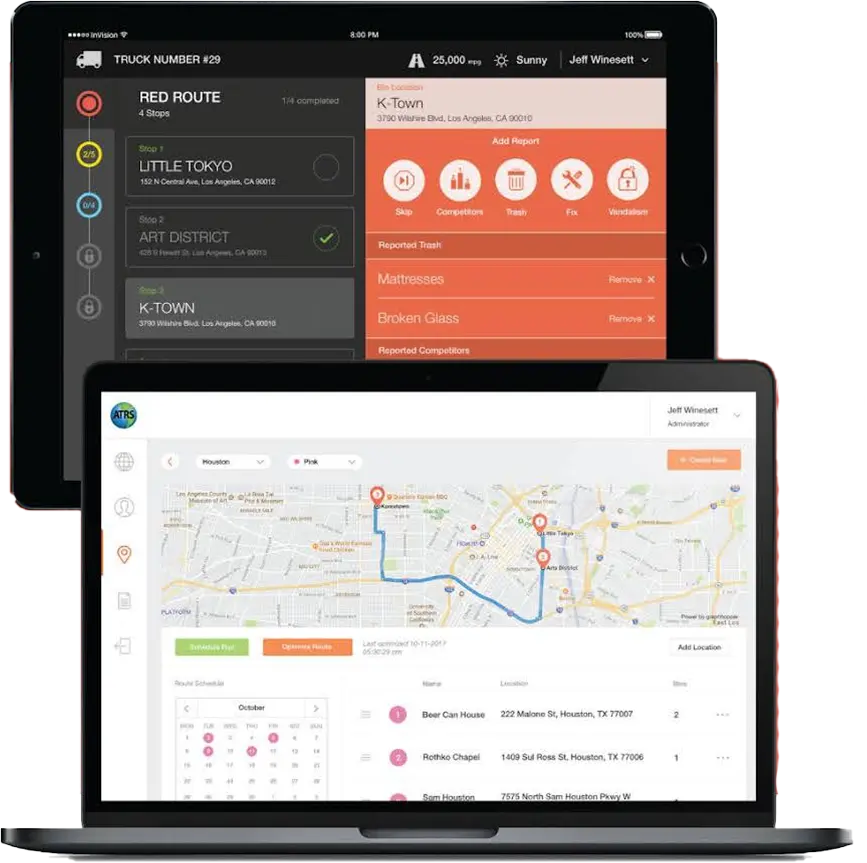
ATRS runs textile recycling logistics across more than 10,000 donation sites, but drivers lacked optimized routes and managers lacked real-time reporting. We built a driver tablet app and an admin dashboard that use AI to predict when bins will be full and optimize driver routes. The real-time visibility became a foundation for forecasting and strategic decision-making.
Link to full case study
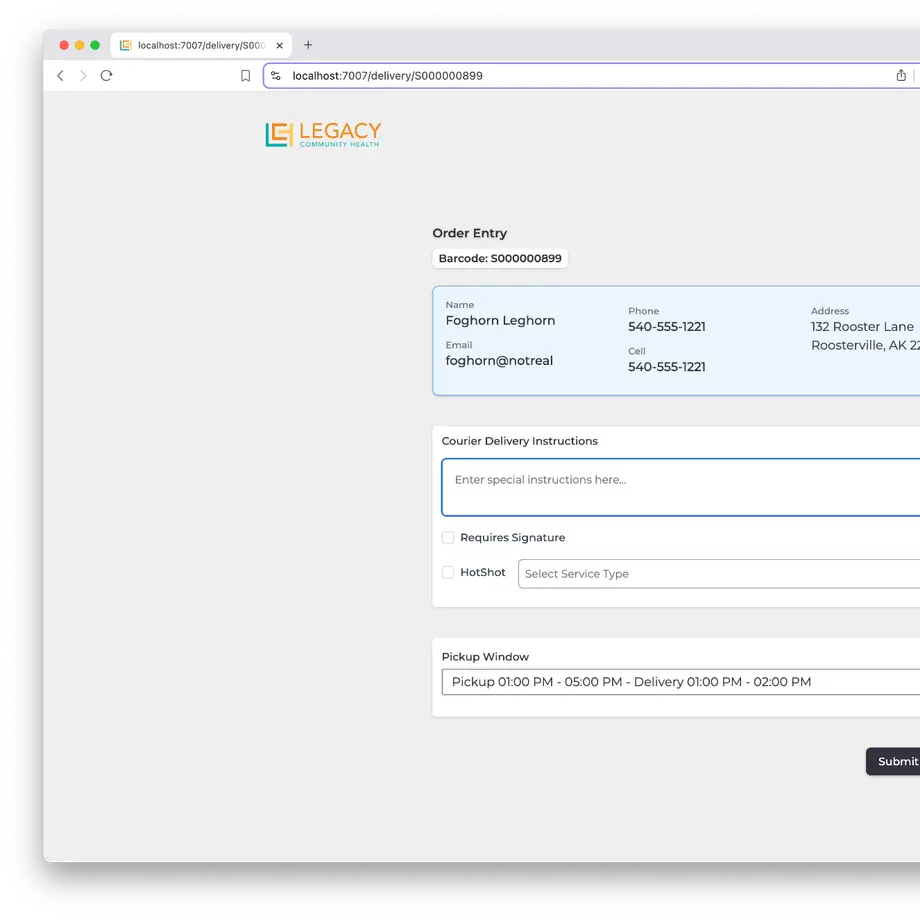
Legacy Community Health, Texas’ largest FQHC, relied on USPS to deliver prescriptions, which meant multi-day waits for patients. We built a custom enterprise application to create, schedule, and track deliveries through local couriers, with AI routing built in. Delivery went from multi-day to same-day, cutting costs and improving service to patients.
Link to full case study
Our AI automation services start from the workflow, not the technology. These are the processes we automate most often.
Read forms, PDFs, faxes, and handwritten records, extract the data, and route each item to the right queue or system.
Agents that classify requests, pull answers from your knowledge base, draft replies, and escalate to a person when it matters.
Qualify leads, enrich records, and move new customers through onboarding without re-keying data between systems.
Approvals, audits, training, and clinical operations with human review and audit trails at every sensitive step.
Replace manual reports, approval chasing, and spreadsheet handoffs with automation that connects your systems end to end.
Build AI into the products and tools your customers and staff use, from copilots to forecasting, routing, and scheduling.
Our process
Like a seesaw, we balance ambitious AI ideas with practical execution. Every engagement follows our 5D process, and each step retires a delivery risk before the next one starts.
Map the workflow, talk to the people who run it, and review your systems, data, and risks.
You get: A prioritized opportunity, baseline metrics, constraints, and success criteria.
Set the scope, architecture, integrations, model choice, controls, and roadmap.
You get: A delivery plan, technical design, ROI hypothesis, and governance approach.
Prototype the journeys, approval states, and exception handling with the people who will rely on them.
You get: A validated workflow with clear decision points and a human-review experience.
Build the AI components, orchestration, and integrations, with testing, security, and observability.
You get: A production-ready workflow with documentation and test evidence.
Launch, monitor, evaluate, and keep improving as your data and needs grow.
You get: Measured outcomes, operating guidance, and an improvement roadmap.
An AI workflow is only useful if you can trust what it does. We design these controls in from the start, scaled to how sensitive the workflow is.
Permission boundaries, retention rules, and encryption, so each step sees only the data it needs.
Sensitive or low-confidence decisions wait for a person, with the context to decide quickly.
Every action is logged with its inputs, sources, and outcome, so you can see why the workflow did what it did.
Escalation paths and fallbacks, so an unexpected input stops safely instead of moving bad data.
Accuracy checks, monitoring, and change control for models and prompts, with clear owners.
HIPAA and other regulatory requirements built into the architecture when the workflow handles regulated data.
Approvals, clinical documentation, and patient workflows with privacy, human review, and auditability built in.
Medication approvals, alternatives, and compliance workflows where every decision has to be traceable.
Route optimization, predictive scheduling, and dispatch that integrate with your systems and handle exceptions reliably.
Member support, applications, and back-office processing with reliable integrations and clear escalation paths.
AI features, copilots, and agents that set your product apart and scale with your users.
Back-office workflows without the re-keying, manual reporting, and approval bottlenecks.
Working in a regulated space? Read about AI workflow automation in healthcare or see our healthcare software development services.
We don’t stop at strategy decks. We build, integrate, and support the AI we recommend, and we measure it against business outcomes.
What you get with SeeSaw Labs:
You don’t need a finished spec. We’ll find the best first workflow, check your systems and data, define where people stay in control, estimate the value, and map the first phase.
AI workflow automation uses AI models inside a business process to read information, make bounded decisions, and move work between systems. An event such as a new form, email, or record starts the workflow, which then combines AI steps with integrations, business rules, and human approvals. SeeSaw Labs designs and builds these workflows around your existing tools, so the automation fits how your team already works.
Traditional automation and RPA follow fixed rules on structured data: if this happens, do that. They are reliable for predictable tasks but break when inputs change. AI adds judgment. It can extract data from messy documents, understand free-text requests, and route work based on context and confidence. Most of our solutions combine both, using rules where they are safer and AI where rules fall short.
Good candidates are high-volume processes with messy inputs and clear outcomes, such as document intake, support triage, approvals, onboarding, reporting, scheduling, and routing. We have automated medication approvals, clinical audit entry, and delivery routing, and we build AI into products too, including AI-enabled mobile app development. Rare, high-stakes judgment calls are usually better served by AI assisting a person than acting alone.
Use a platform when the workflow is common, low-risk, and well served by existing connectors. Build custom when you need bespoke logic, regulated data, deep integrations, proprietary models, or a differentiated user experience. Many teams land on a hybrid. We recommend the approach that fits your use case, budget, and security needs, and our AI product development and integration work covers the custom pieces.
It is our structured starting point and the core of our AI automation consulting. In a short engagement we:
Yes. Most of our projects connect to systems already in place, including CRMs, ERPs, databases, document systems, and internal tools. We use APIs, webhooks, and middleware where they exist and build adapters where they don’t, so your team gets the benefits without replacing the tools they rely on. A systems review in the Discover phase confirms what is possible before we commit to a design.
We design review points into the workflow. Low-confidence results, sensitive data, and regulated decisions go to a person with the source material and the AI’s suggestion side by side, and their decision is logged. The goal is removing repetitive work, not replacing the people who know your business, so your team spends its time on the judgment calls that matter.
Every project follows strict data governance and encryption standards, with access controls scoped to each step of the workflow. Actions are logged with their inputs and outcomes so they can be reviewed and audited. We have built HIPAA-compliant platforms for healthcare and pharmacy clients, and we apply the requirements that fit your industry and data from the first design decision.
Pricing depends on the complexity of the workflow, the state of your data, the systems we need to integrate with, and your compliance requirements. Engagements are usually a defined project scope or an ongoing monthly retainer. Many clients start with the readiness review so the investment is tied to a prioritized, measurable plan.
A single, well-scoped workflow can go live in weeks. Larger AI platforms with many integrations can take several months, depending on scope, data readiness, and approvals. We agree on milestones up front so you see working results early rather than waiting for one big launch.
We set baselines in the Define phase, such as hours per task, error rates, cycle time, throughput, and cost per transaction, then measure the same numbers after launch. We also track adoption: how often people accept, edit, or override the AI’s output. Every workflow is judged on business outcomes, not on how impressive the technology sounds.
Yes, and we recommend it. Most clients start with one high-impact workflow, prove the value against a baseline, and then expand. Starting small reduces risk and builds the confidence, data foundations, and governance needed for a larger AI program. The integrations and controls from the first workflow carry over to the next one.
AI is transforming healthcare and insurance, but adoption faces hurdles like data security, legacy systems, stakeholder alignment, bias, and cost—strategies are key to making it work effectively.

Modernizing insurance systems is critical, with challenges and best practices for integrating new technologies into legacy infrastructure to enhance efficiency, security, customer experience, and long-term scalability.

Modernizing legacy healthcare systems is essential but poses cybersecurity risks, highlighting best practices for risk assessment, strategic planning, data mapping, and implementing robust security measures.
Visit The Lab for more Guides, Tools and Experiments by SeeSaw’s team of digital inventors!